Original filmOpen on Vimeo
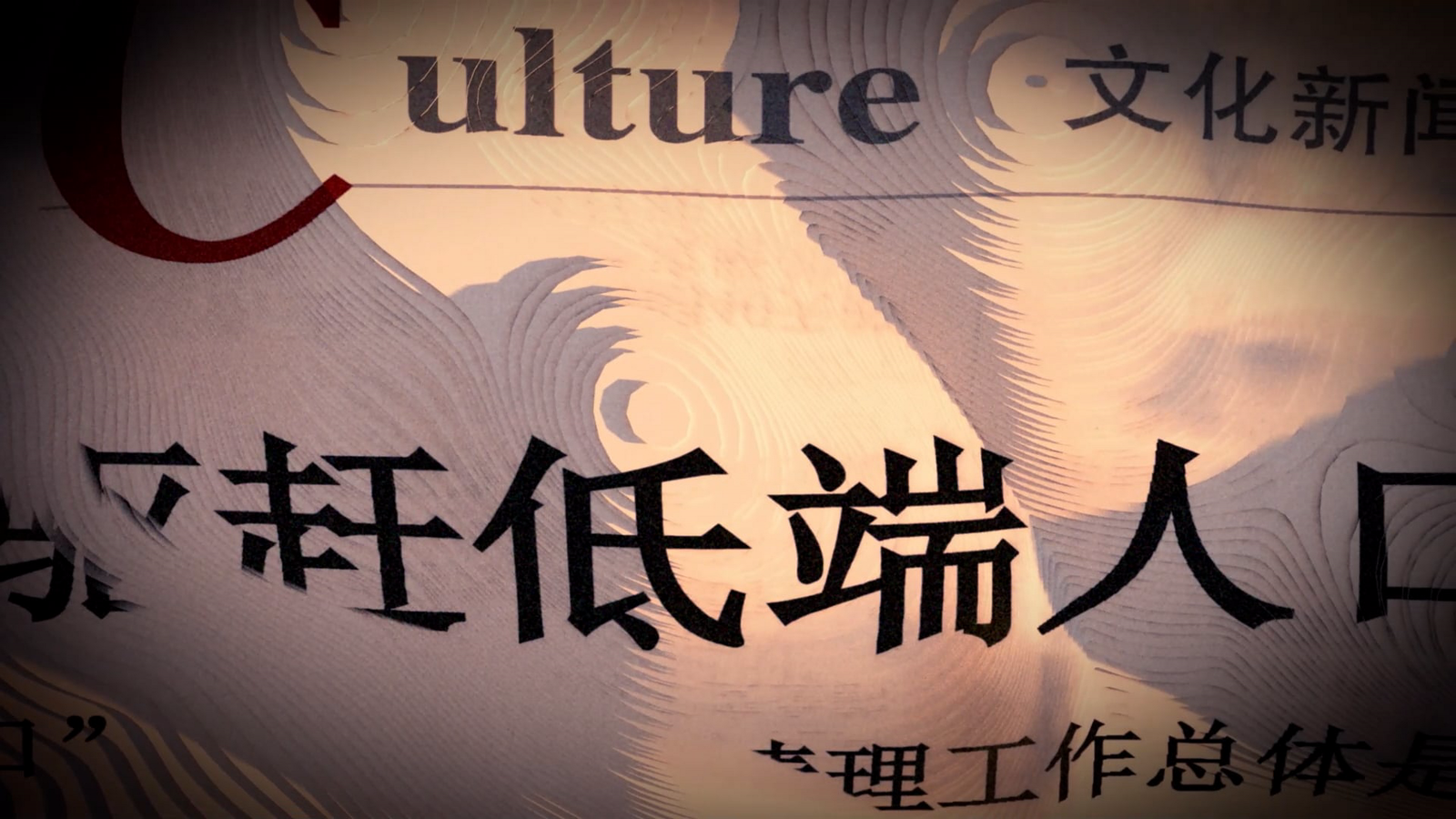
3D experimental video
Low-End Population
A layered 3D video where maps, text, smoke, particles, and weather turn public material into moving image.
Project recognition
Source-linked records for this project.
 Official award record
2022 Young Ones ADC Student Gold Cube
- Category
- Motion / Film Craft / Motion Graphics
- Annual ID
- YO22_A025G
Official project-level award record
EvidenceOfficial One Club archive ↗ Archived portfolio record
The Rookies 2021
3D Animation Rank A- Category
- 3D Animation
Original-site record; no verified current direct Rookies result URL
EvidenceOriginal project page ↗
Verified record
Project facts
Published October 2021First work in the Public Secrets series2017 Beijing low-end population
mapsnewspaper textweatherparticlessmokeexplosion forms
Concept3D scene constructionMotion designEditing / color
Cinema 4D — 3D modelingAfter Effects — editing and colorHoudini — explosion effectsBlender — cloud elements
Original project documentation
Research and production archive
This case study presents selected research, references, methodology, and production material from the 2021–2022 project archive. Factual claims and source availability have not been independently reverified for this publication.
Reference images remain in their original research context and are not presented as Ben Ma's authored artwork.
Project overview
This is the opening moving-image work in the Public Secrets series.
The project uses 3D motion design to translate a public event into an indirect visual language.
Written research and moving image operate together: one establishes the event record, while the other turns that record into spatial and temporal experience.
The guiding question was how digital art could engage with political subjects that were widely recognised but difficult to discuss directly.
Survey
Revolutionary Rebel Command of the Shanghai Publishing System; Revolutionary Rebel Committee of the Shanghai People’s Fine Arts Publishing House. Gaoju Mao Zedong sixiang weida hongqi ba wuchan jieji wenhua dageming jinxing daodi – geming wuzui, zaofan youli. 1966-1967.
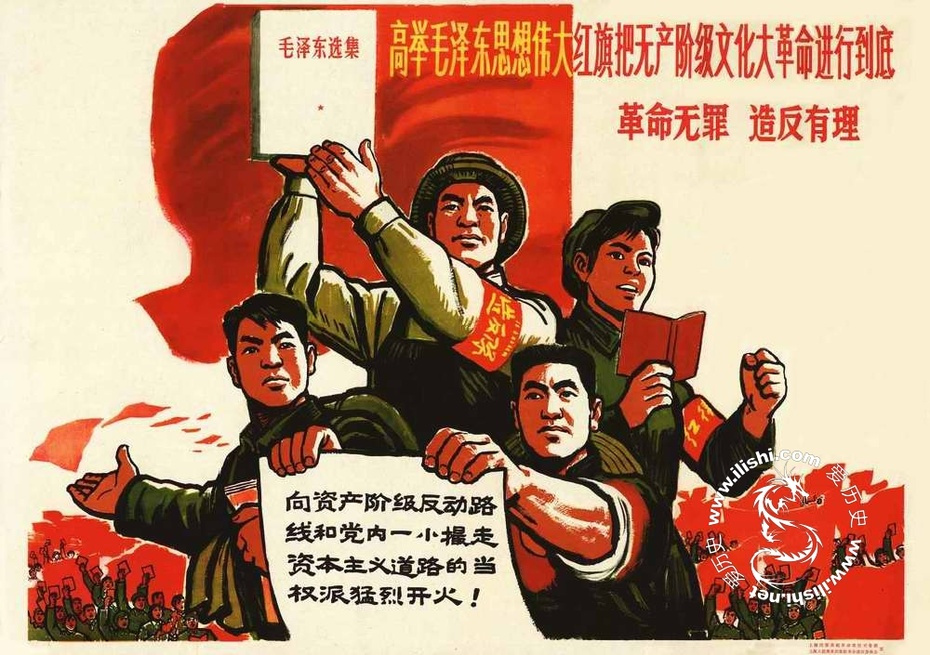
Historical poster used by the original dossier to frame its working definition of a public secret.Original project record — Svrvey archive reference
For a detailed investigation and analysis, please see my research proposal: https://kdocs.cn/l/cqCi3Q4PU0xZ.
In short, a public secret is a concept or idea that is “officially” kept secret or restricted from knowledge, but which may be widely known in practice.
Or, it refers to something that is widely known as a fact, but that no one most closely associated with it is willing to categorically admit in public.
In China, a typical case of public secrecy is the Cultural Revolution.
Moodboard
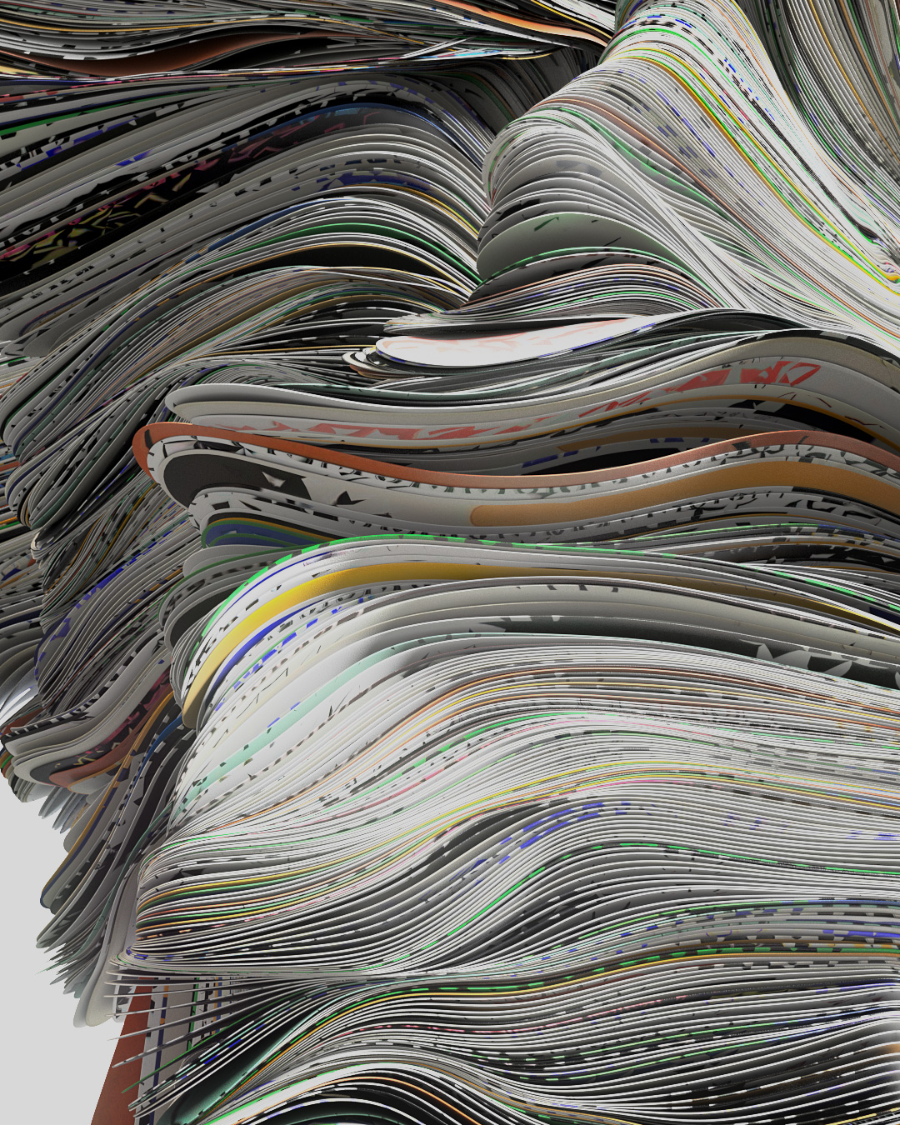
Distortions reference: densely layered surfaces behaving as one shifting form.Media.Work Studio — Research / Distortions (2021)
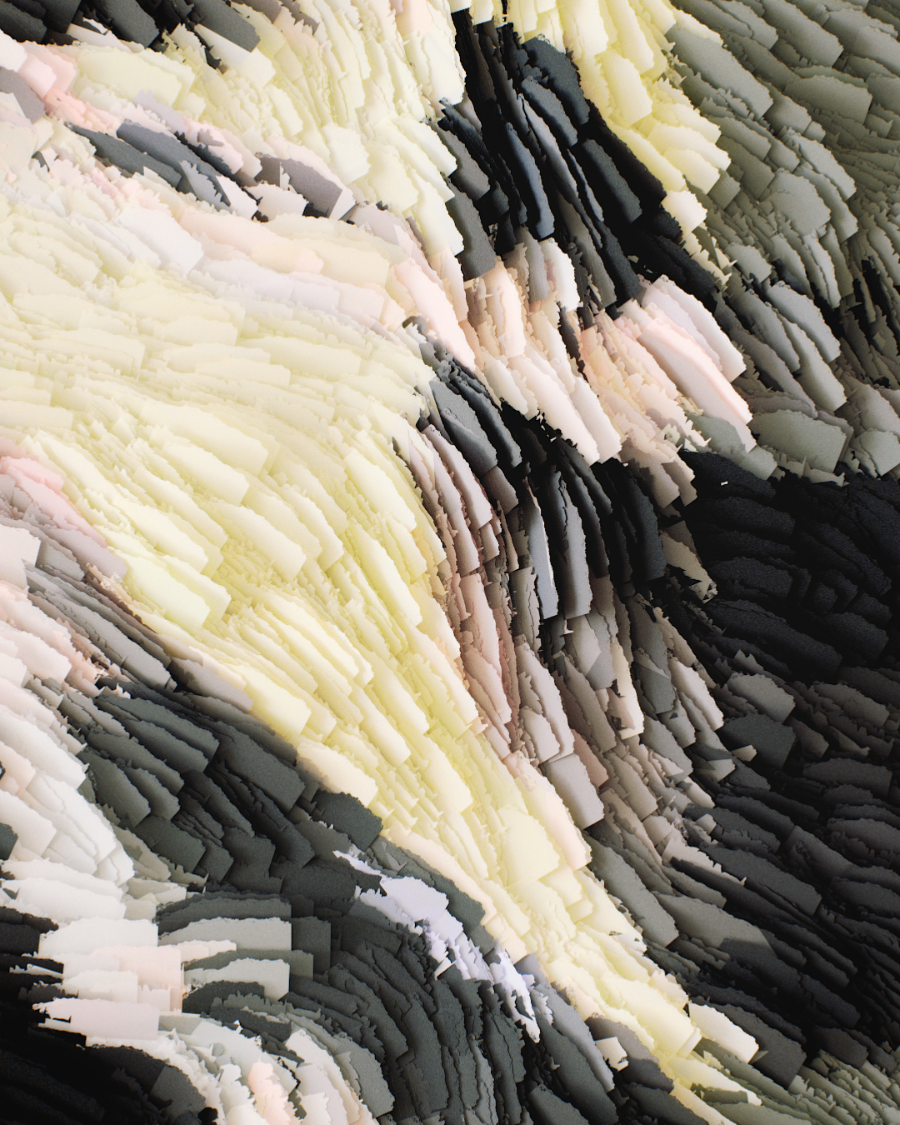
Distortions reference: tonal strata used to study depth, pressure, and material change.Media.Work Studio — Research / Distortions (2021)
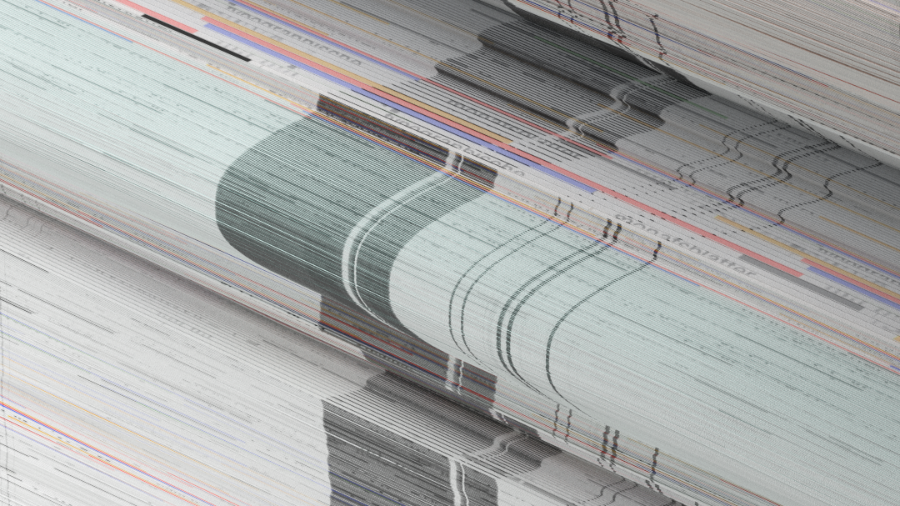
Distortions reference: horizontal displacement as a model for unstable public records.Media.Work Studio — Research / Distortions (2021)
Maxim Zhestkov, Igor Sordokhonov. Distortion. 2021. https://www.behance.net/gallery/124878335/Research-Distortions.
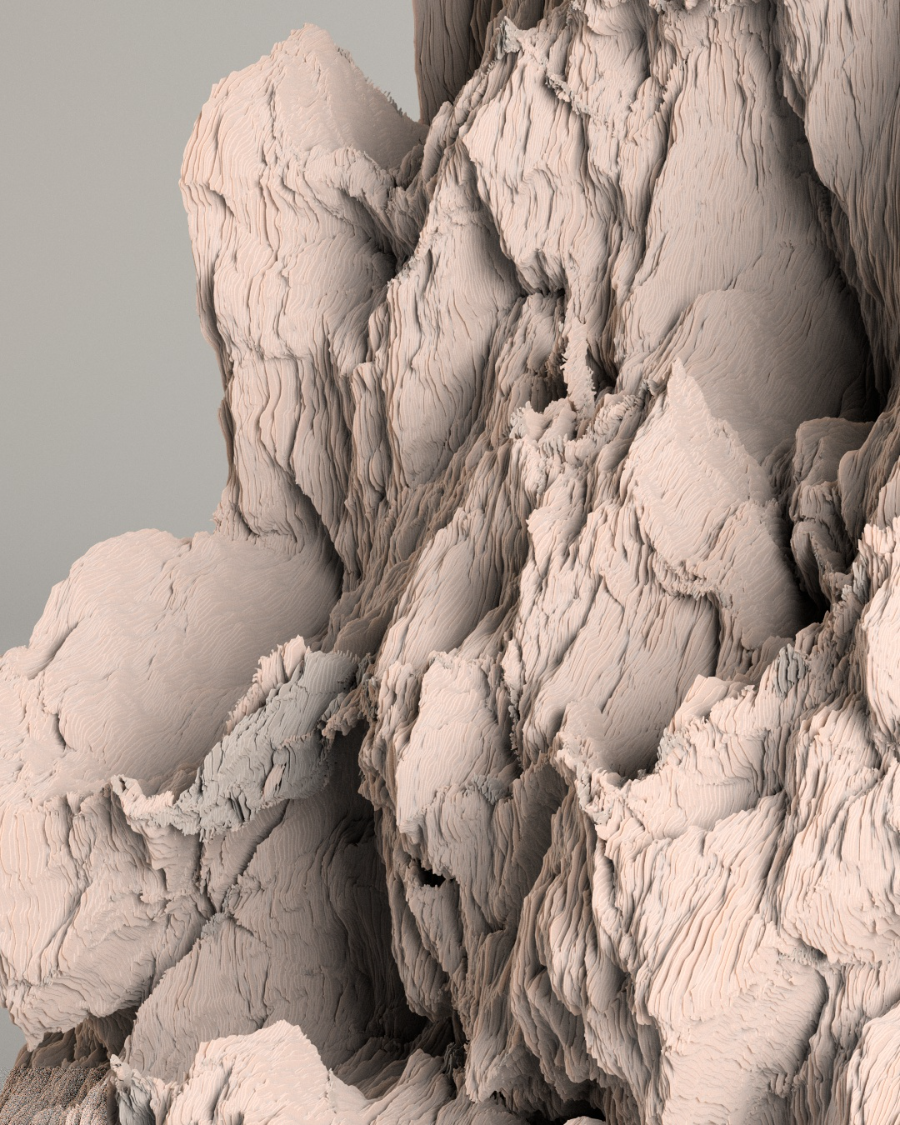
Distortions reference: folded layers developing into a terrain-like mass.Media.Work Studio — Research / Distortions (2021)
The use of multiple layers of objects in different colors or the overlay of multiple layers of paper to form different shapes fascinated me when I first saw this series of drawings.
The proposed visual system combines abstract scenes with imagery tied to specific events.
Abstract moving forms were intended to represent tension between collective struggle and government pressure.
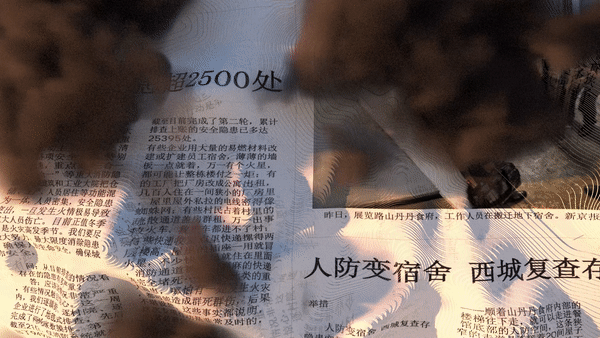
Newspaper surfaces were intended to suggest how reported facts can be bent, recoloured, or obscured.

Marble Run reference: repeated spheres, soft light, and restrained material motion.Revenant, Craig Simmers, Olaf Blomerus, and Dan Harper — Marble Run (2021)
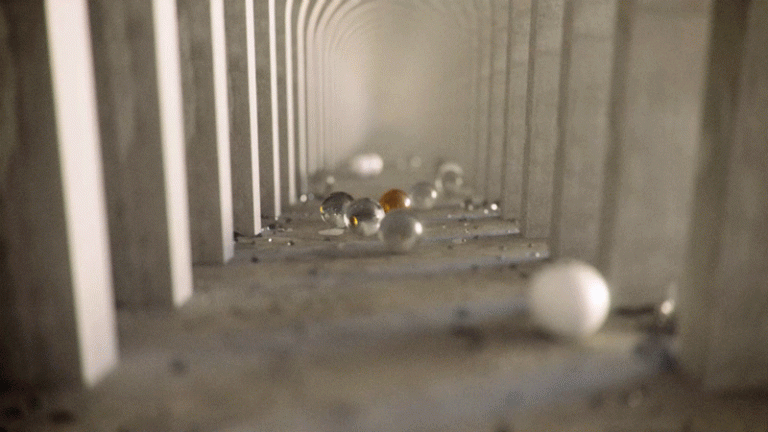
Marble Run reference: depth, repetition, and a measured path through an architectural field.Revenant, Craig Simmers, Olaf Blomerus, and Dan Harper — Marble Run (2021)
Revenant. Marble Run. 2021. https://www.behance.net/gallery/125632003/Marble-Run.

Marble Run reference: orbital spacing, directional light, and controlled accumulation.Revenant, Craig Simmers, Olaf Blomerus, and Dan Harper — Marble Run (2021)
I was very inspired by this work. I want to use abstract objects to suggest public secret events or the parties involved in the events. The motion of an object can represent many things.
For example, a hint that something was raging, or that something had been forgotten, or even that some public secret remained in the memory of the masses.
It can also imply that some key figures are always pursuing the truth or outcome of some public secret, despite the difficulties of circumstances and the obstruction of others.
Proposed research scope
The original proposal considered public-secret events in China since 2000—or, alternatively, since Xi Jinping took office—alongside related visual artworks and artists as prospective cases.
Selection criteria
The project used three criteria to select cases:
1. The events are public, participated in or led by the Chinese government, and have an impact within China.
2. The events have been somewhat politicized by some artists who have engaged with them through digital art.
3. None of the incidents were officially sanctioned by The Chinese government, which suppressed them through political censorship or digital means.
Incident context
Event date
18 November 2017
Incident overview
The film centres on the fire in Xinjian Second Village, Xihongmen Town, Daxing District. The original project record notes 19 deaths and eight injuries.
Media restrictions
The original research record notes restrictions on media reporting after the fire and the use of official news copy.
Restricted public discussion
The Initium report on Beijing displacement
The rest of the help posts and exposure posts on Douban have been deleted:
Archived web recordOriginal source link unavailable (checked 2026-07-15)
Surviving photographsOriginal source link unavailable (checked 2026-07-15)
Related artistic responses
The archived research cited an article examining Beijing's urban structure and the policy label 'low-end population.'
Urban structure and the 'low-end population' label
The “Wind from Beijing —— Yang Thousand Exhibition” opened at the White Box Art Museum, which shows the artist’s latest works “Beijing Waste”, “Cinct”, “Ladder” and “Bell”, with the theme of the low-end population in Beijing.
Beijing clean up low-end population documentary Chung “After the Fire”
Related cases
Shanghai, 2022
The archived research identified Shanghai's 2022 COVID-19 lockdown as a later case study, citing reports of prolonged confinement, disrupted access to food and income, and public criticism of the authorities' response.
Many artists have used digital art to express their dissatisfaction with the Shanghai government and have even held art creation competitions around the theme of the Shanghai epidemic.
永远的草莓园 . “四月之声.” 【CDTV】永远的草莓园|四月之声, https://chinadigitaltimes.net/chinese/680095.html. Accessed 29 Apr. 2022.
The Voice of April, retained in the original dossier as context for the 2022 Shanghai lockdown.China Digital Times archive — The Voice of April
海辛. “Steampunk Shanghai.” AI, Art, Shanghai, https://docs.qq.com/slide/DV3hGcXVIS1BTTUVp. Accessed April 29, 2022.
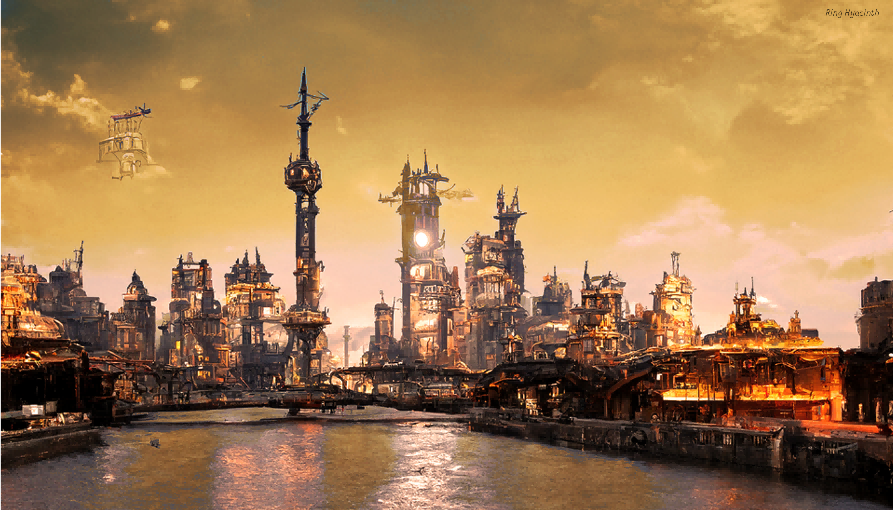
Steampunk Shanghai, retained as an adjacent digital-art response in the original dossier.海辛 — Steampunk Shanghai
The Shanghai 2022 epidemic event can be described as an amalgamation of many small Chinese public secrets with a new event occurring almost every week since March.
The number of people affected by this event is large, and the duration is long. The number of metaphorical digital artworks produced during this time is significant. Therefore, this event is well worth studying.
Fengxian case
The archived research described the Xuzhou chained-woman case, which drew national attention in early 2022 after a video showed a woman being confined in Feng County, Jiangsu. Conflicting official statements and subsequent investigations intensified public concern about trafficking, abuse, and the protection of vulnerable people.
By creating digital art, many artists used the incident to call on the Chinese government to protect rural women and people with mental illnesses, combat trafficking and sexual abuse of women and children in rural China, and question the local government’s actions and official media in the incident.
The Fengxian Chain Girl incident is arguably one of the special public secrets in China since the 21st century. This incident refers to women’s issues such as women’s rights and trafficking of women in the countryside, which is rare in China and is an event that is very worthy of study.
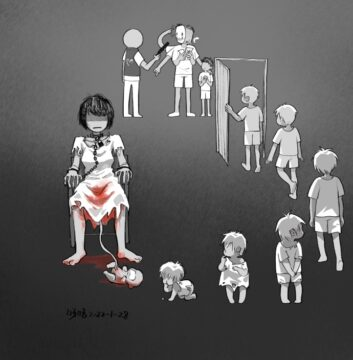
A visual record of the Xuzhou chained-woman case retained in the original research horizon.Archived source currently unavailable
撒盐少年. ” Xuzhou Chained Woman Incident.” 被狗链拴住20年的母亲, https://posts.careerengine.us/p/62010b63dc1bfe7ac11e2ffe?from=latest-posts-panel&type=title. Accessed April 29, 2022.
Blood Room Map
The archived dossier described Blood Room Map as an electronic map marking forced-demolition locations in mainland China; its current availability has not been reverified.
These adjacent cases remain part of the original research horizon; they are not presented as completed works in this project.
Methodology
I express my understanding and analysis of public secret events in China by creating digital media works.
After studying digital media art in college and graduate school, I am passionate and creative about making digital media artworks. I hope to combine my mastery of artistic expression and political events through metaphorical means. At the same time, almost all of China’s public secrets after the 21st century are inextricably linked to the Internet, and expressing them through digital art is in line with the times.
I chose a practice-led method because written research and moving image could work together: the text establishes the record, while the film translates it into spatial and temporal experience.
The film received a 2022 Young Ones ADC Student Gold Cube in Motion / Film Craft / Motion Graphics. In the original proposal, that recognition supported the decision to continue exploring practice-led research through moving image.
The film models newspaper, changing text, an urban explosion, and a map of Beijing as visual metaphors for the fire, official reporting, and the displacement that followed.
These elements, together with explanatory text, were intended to make the event legible to viewers unfamiliar with its Chinese context.
The original proposal anticipated additional moving-image studies of other public-secret events.
It also considered AI-generated imagery and NFTs as possible media; these were prospective directions, not outcomes documented on this page.
Production process
Tools
Cinema 4D for modelling; After Effects for editing and colour; Houdini for the explosion effect; Blender for cloud elements.
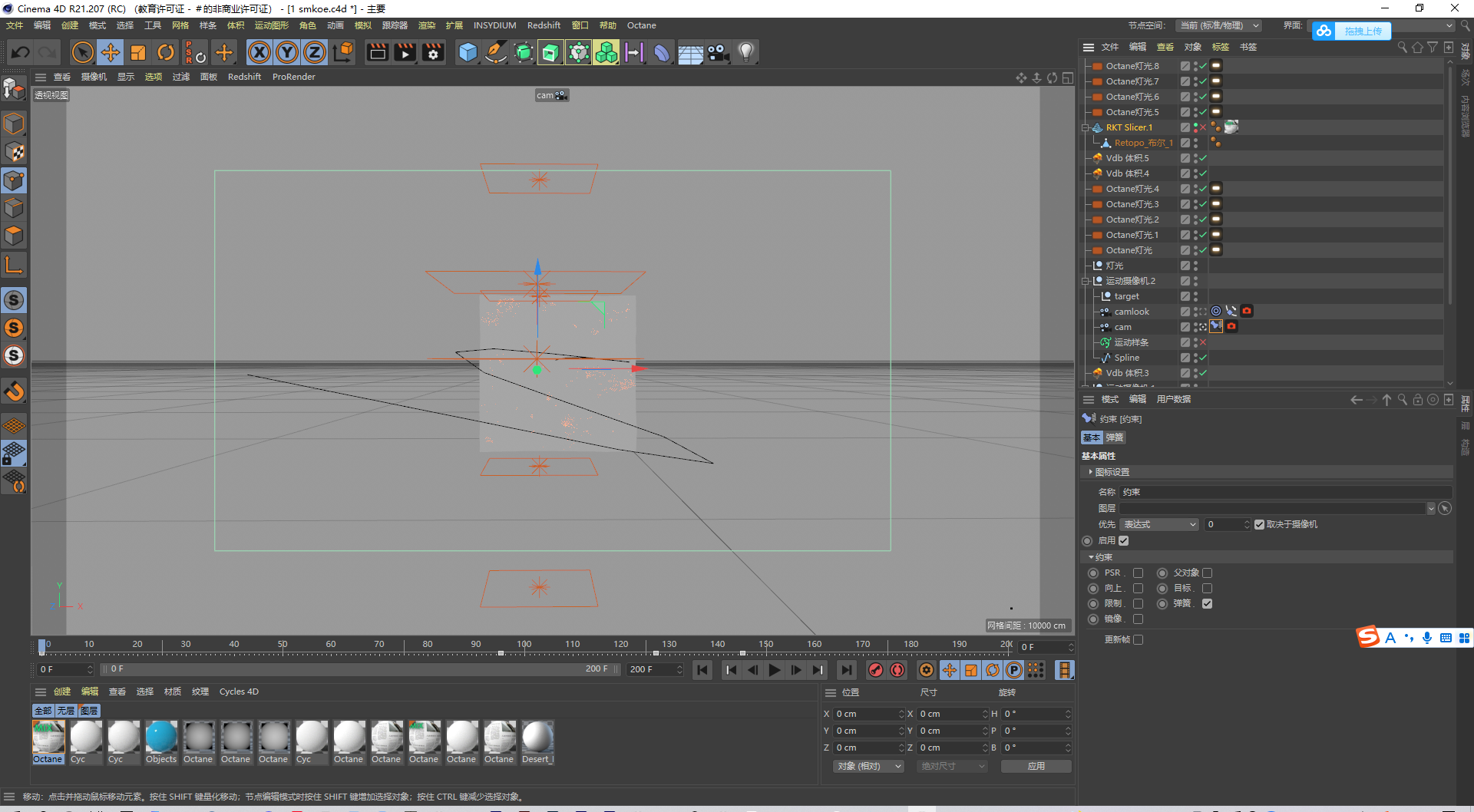
Cinema 4D scene blocking with camera, lighting, and layered geometry controls visible.Original Low-End Population project record
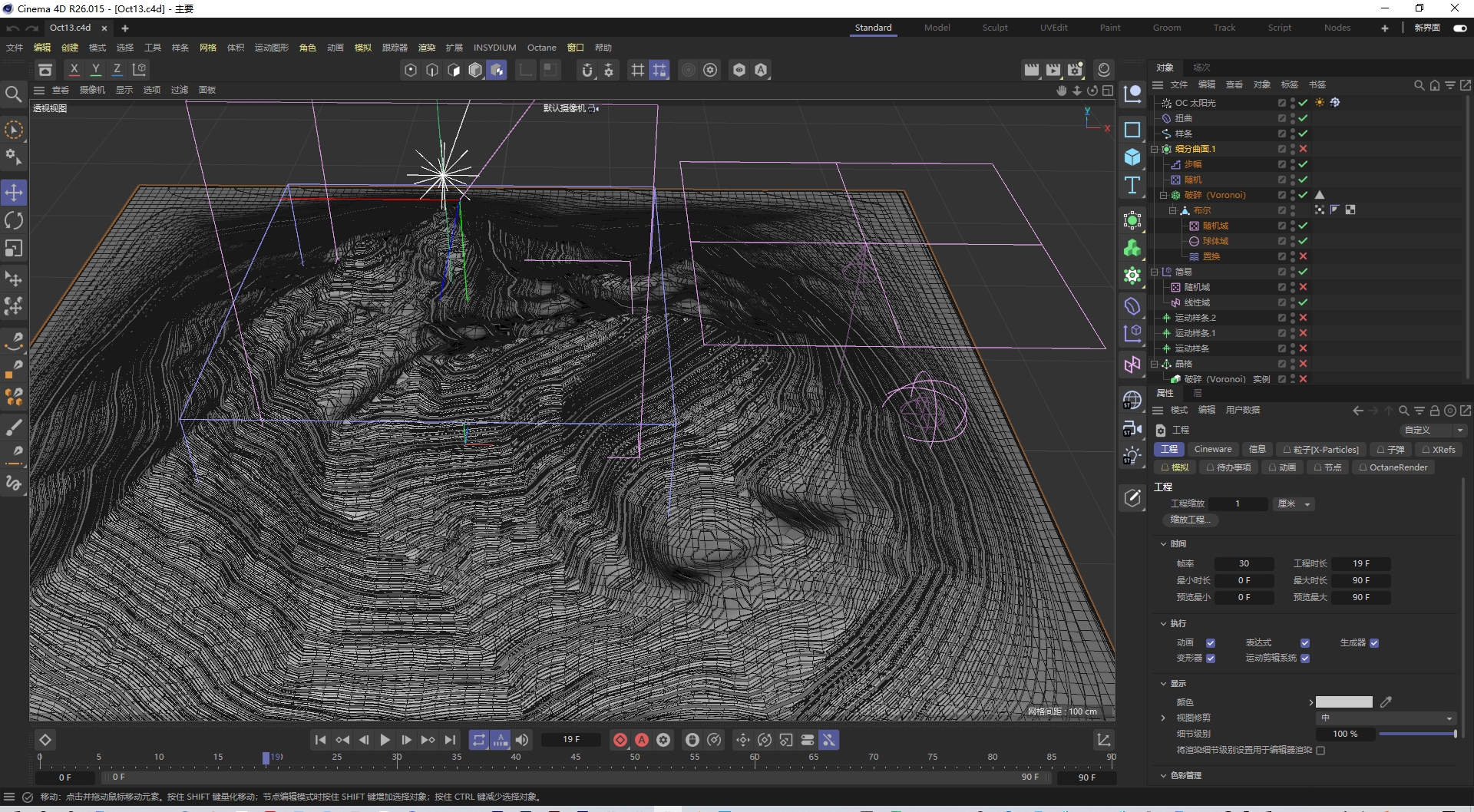
Wireframe terrain development and procedural scene setup in Cinema 4D.Original Low-End Population project record
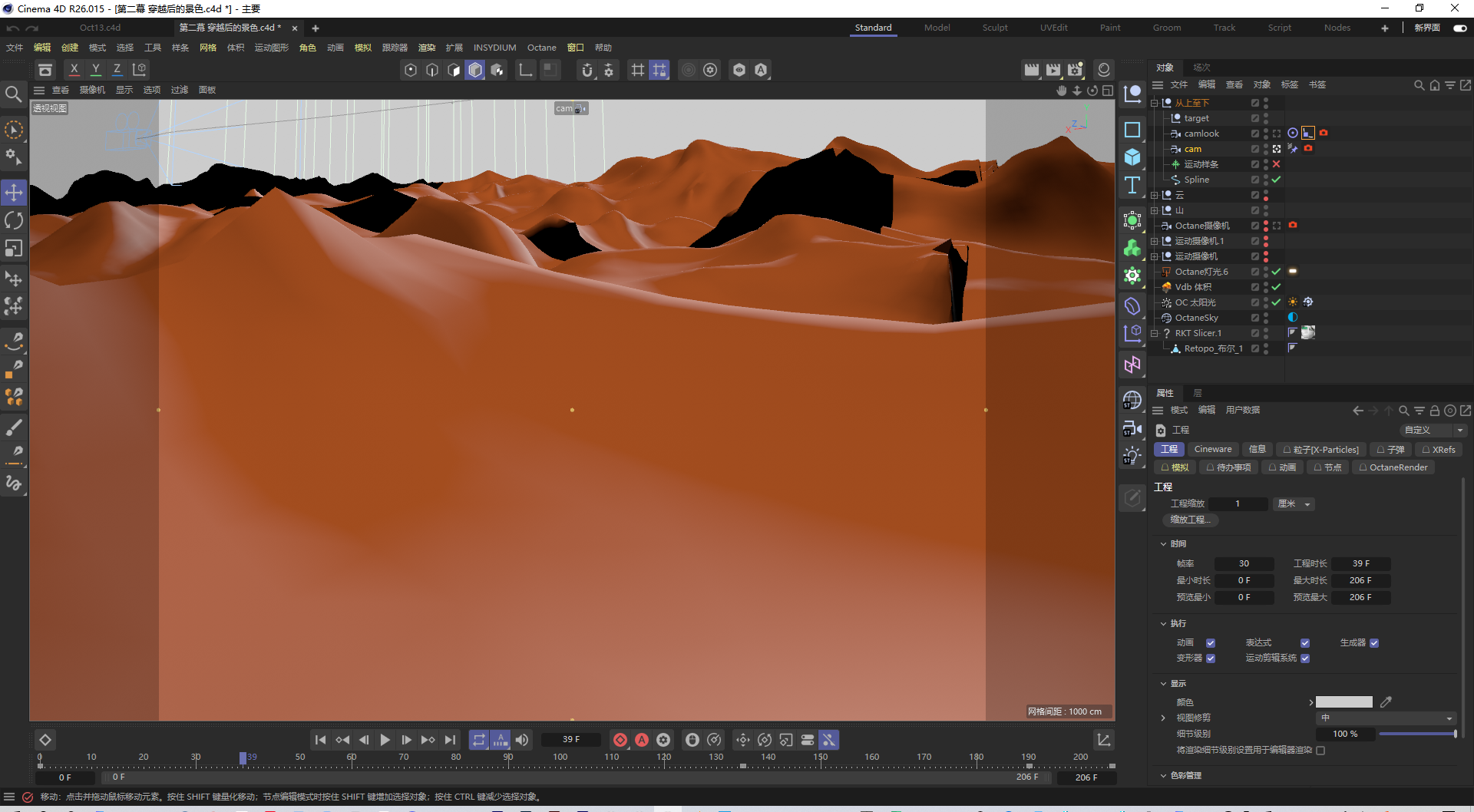
Material and camera test across the layered terrain scene in Cinema 4D.Original Low-End Population project record
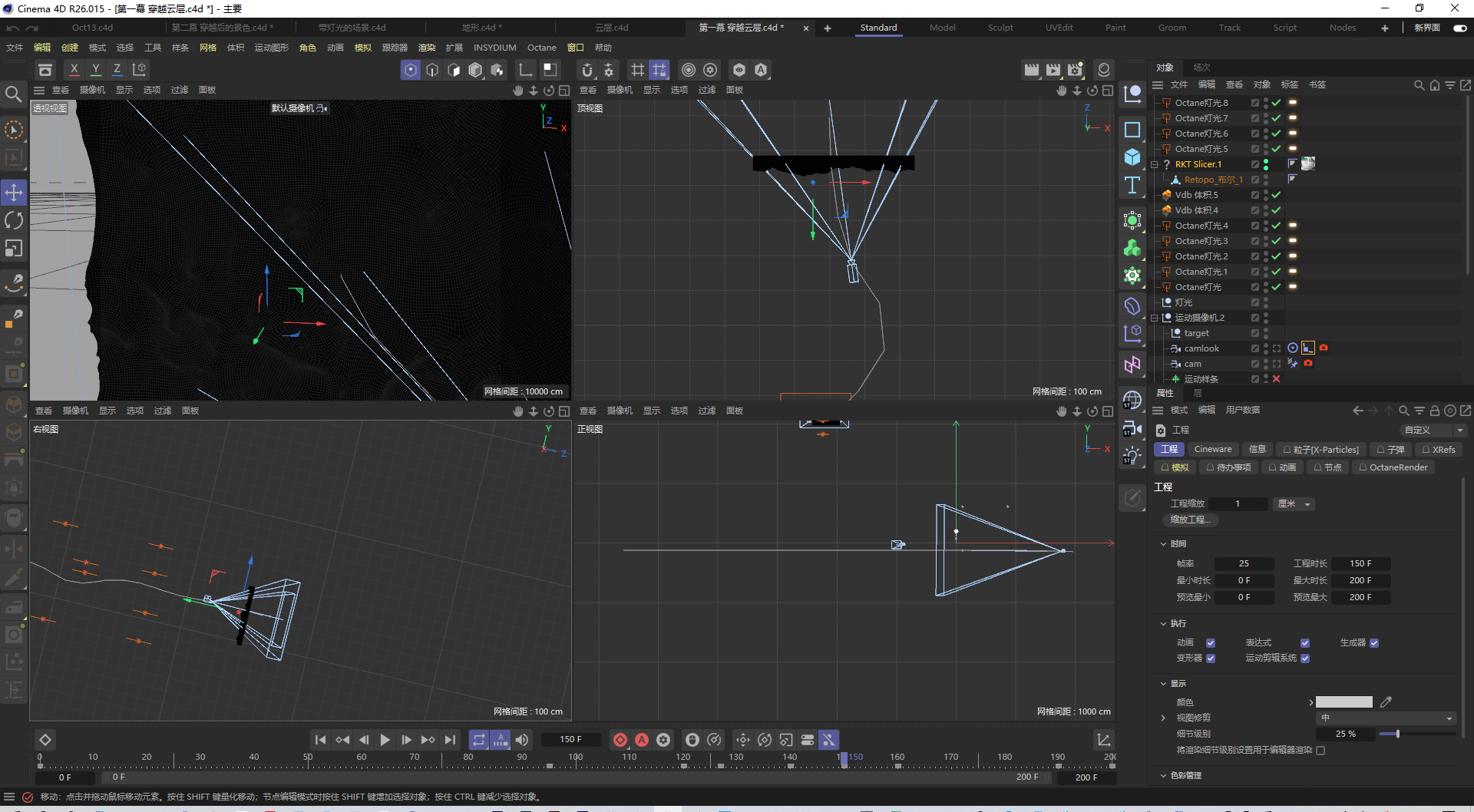
Multi-viewport camera and lighting layout for the terrain sequence in Cinema 4D.Original Low-End Population project record
Final film
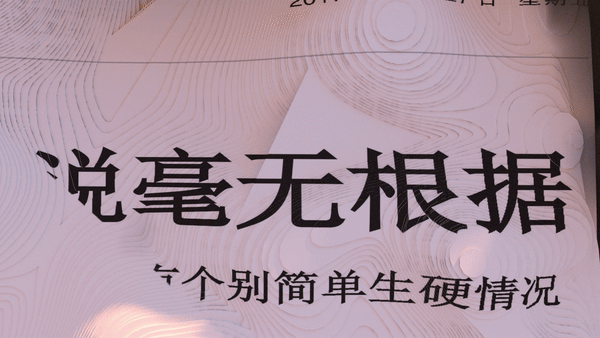
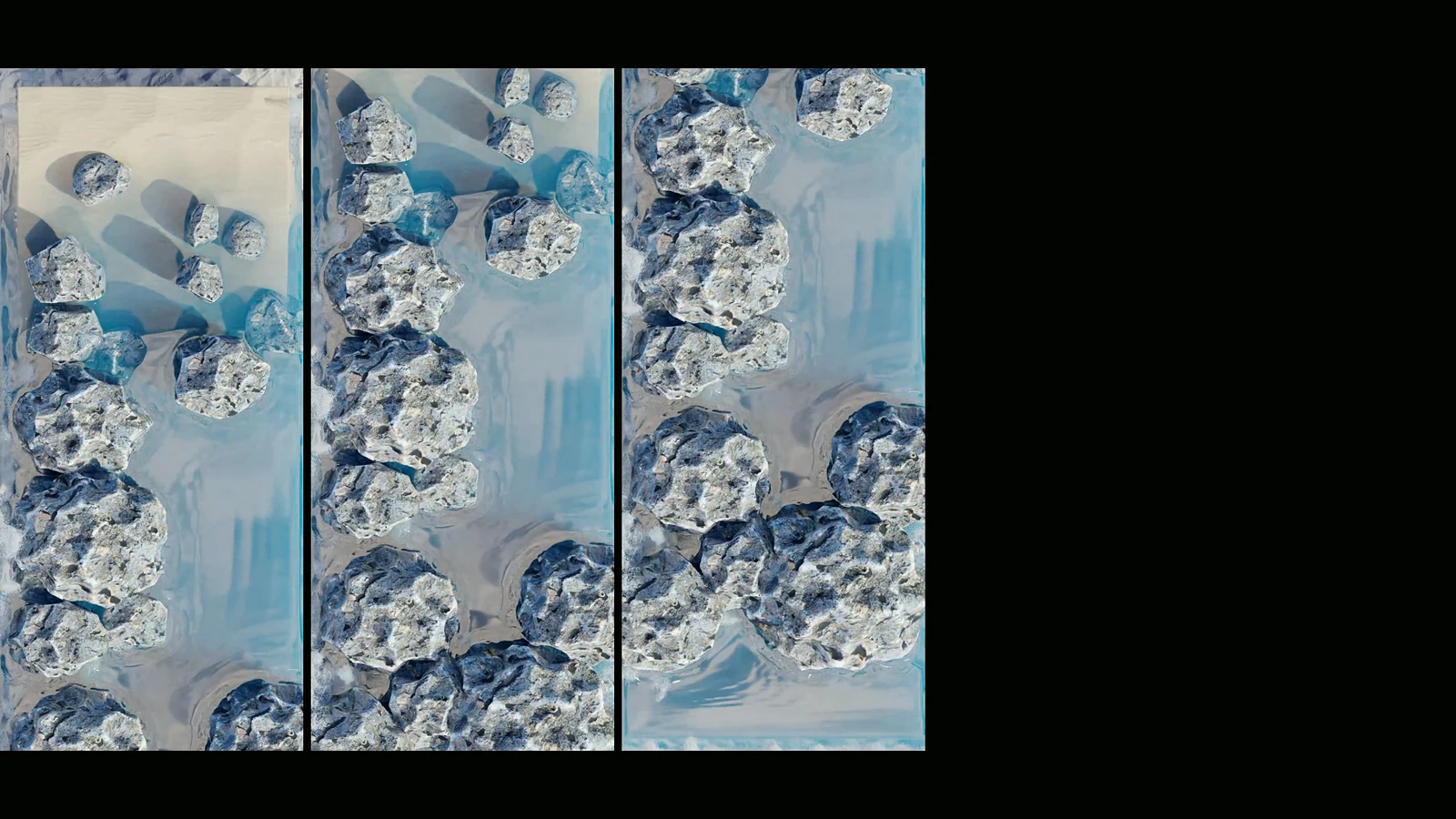
Terrain: A changing map of Beijing suggests the repeated movement and displacement of lower-income workers.
Newspaper: Public reporting becomes a surface that bends, layers, and changes under pressure.
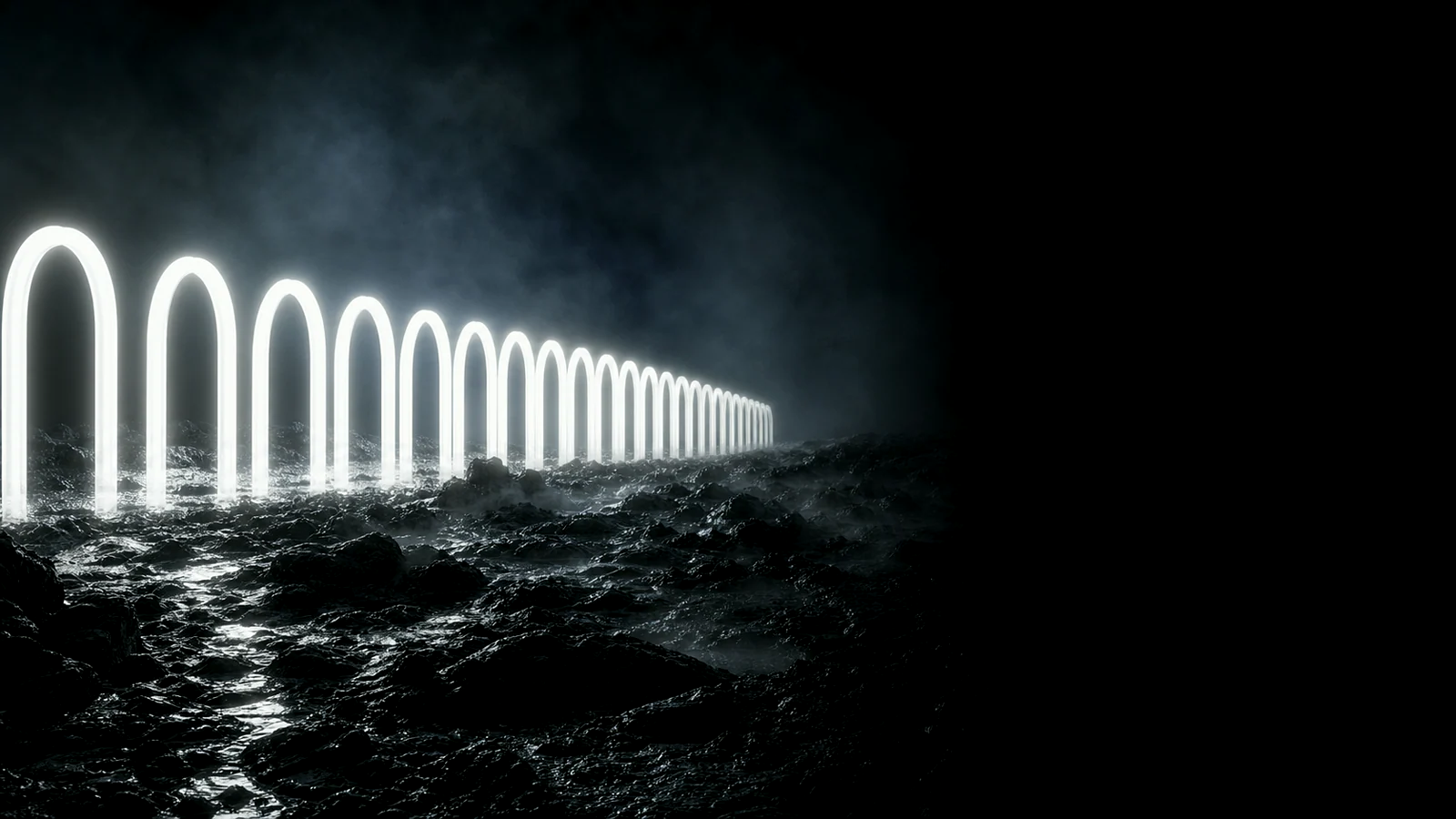
Light and weather: Shifts in illumination and hostile weather extend the event's duration and severity.
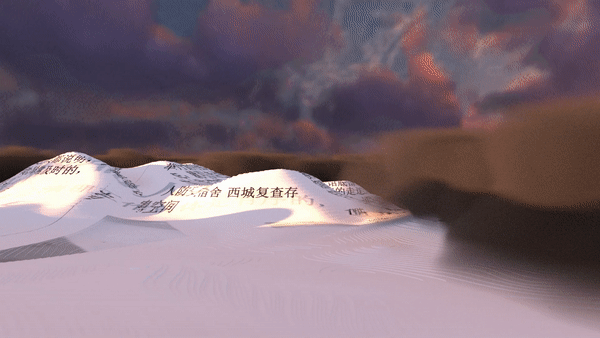
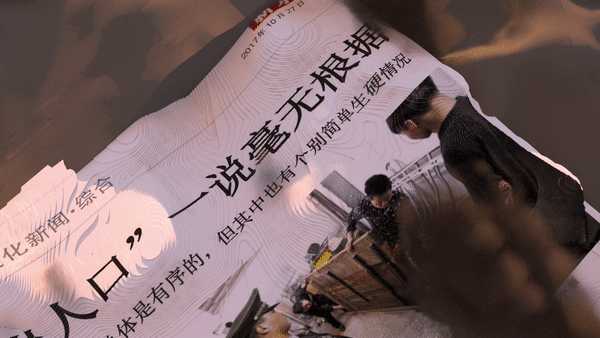
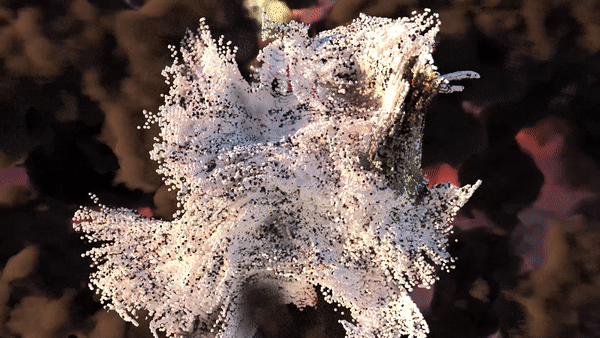
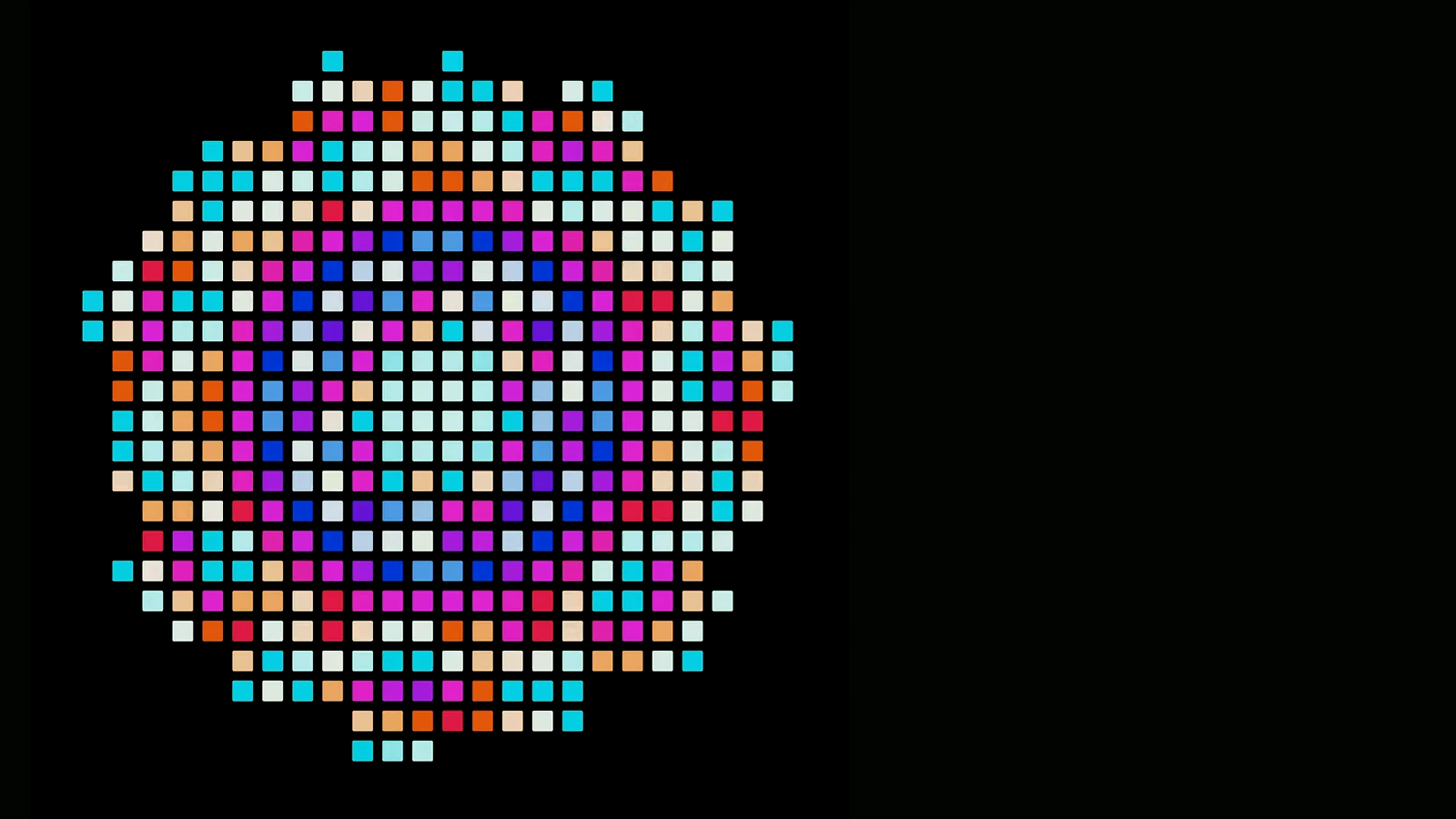
Particles, map, and text: Fragments disperse and reassemble, linking location, public language, and population.
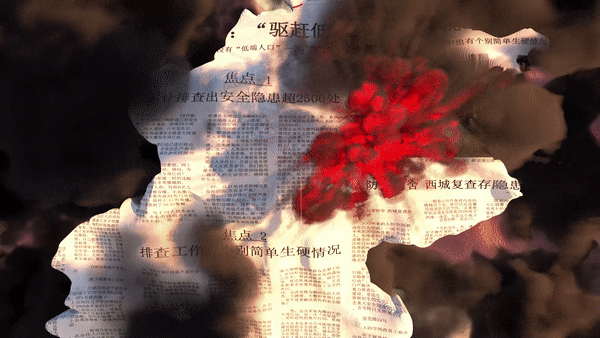
Explosion and cloud: The initiating fire returns as an exceptional rupture rather than a decorative effect.