Full filmOpen on Vimeo
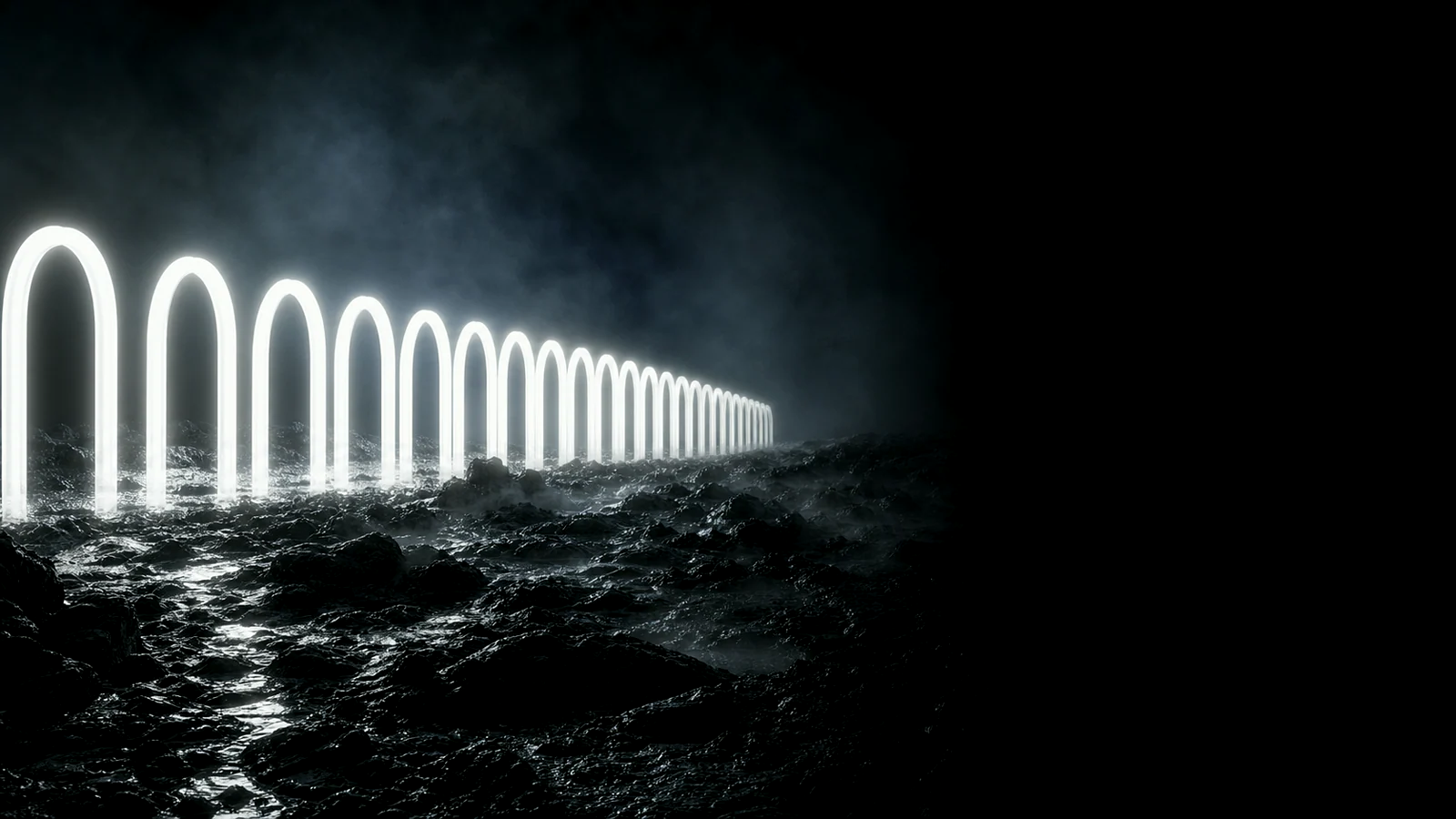
C4D light study
Light
A spatial motion study where light, surface, and camera rhythm become the structure instead of the backdrop.
AI-assisted cover created for this website; original project imagery appears below.
Project approach
A four-part 3D motion study in which light, material, and camera rhythm carry the visual progression.
Brief
Create a compact 3D animation that studies how light can define space, material, and mood without needing a narrative setup.
Approach
Keep the form restrained and let repeated light behavior, surface response, and camera distance create the visual progression.
Output
Four connected scenes move from luminous structures to a floating-bulb environment through changes in light, material, and camera rhythm.
Film
Reference images remain in their original research context and are not presented as Ben Ma's authored artwork.
Light
August 2021
3D Experimental video
Original overview
Light is a four-part 3D motion study developed at SCAD. Each sequence treats illumination as the primary subject rather than a secondary effect.
Built in Cinema 4D, the project examines how light interacts with terrain, glass, vegetation, and moving water to shape atmosphere, depth, and rhythm.
Concept
My early Cinema 4D studies revealed how strongly lighting could reorganize a scene, changing both material perception and spatial hierarchy.
That observation became the premise of this project: shifts in intensity, color, and timing would carry the motion while the surrounding environments remained deliberately restrained.
The goal was to build a sequence in which light itself functions as the central moving form.
Each part pairs a different geometry and material system with a distinct lighting behavior.
Changes in intensity and timing respond to the soundtrack, allowing the environment to register the motion of the light.
Moodboard
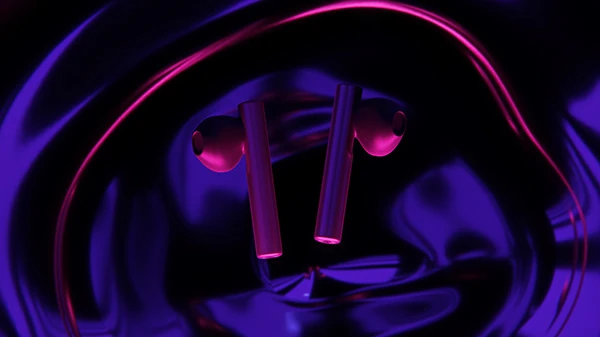
Source credit unavailable in the archived page
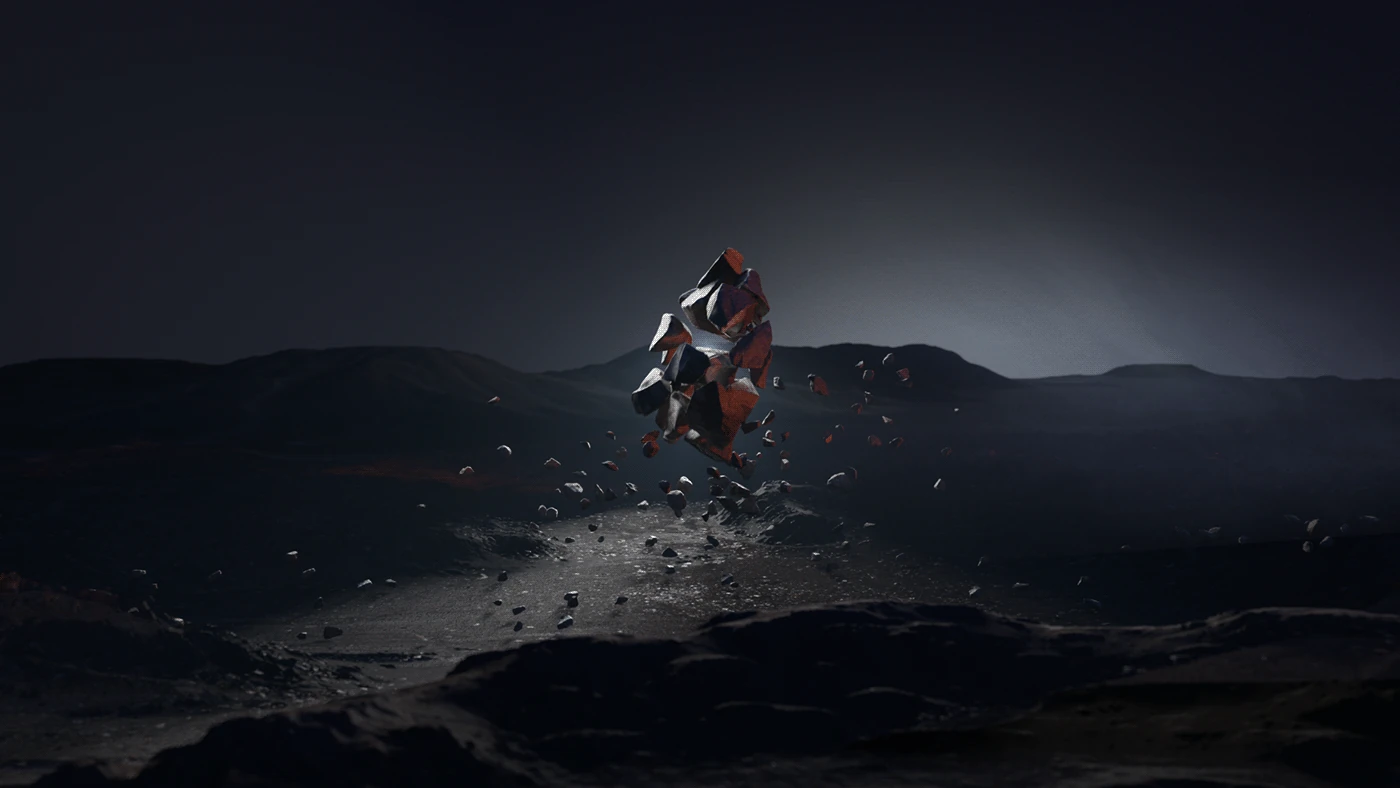
Source credit unavailable in the archived page
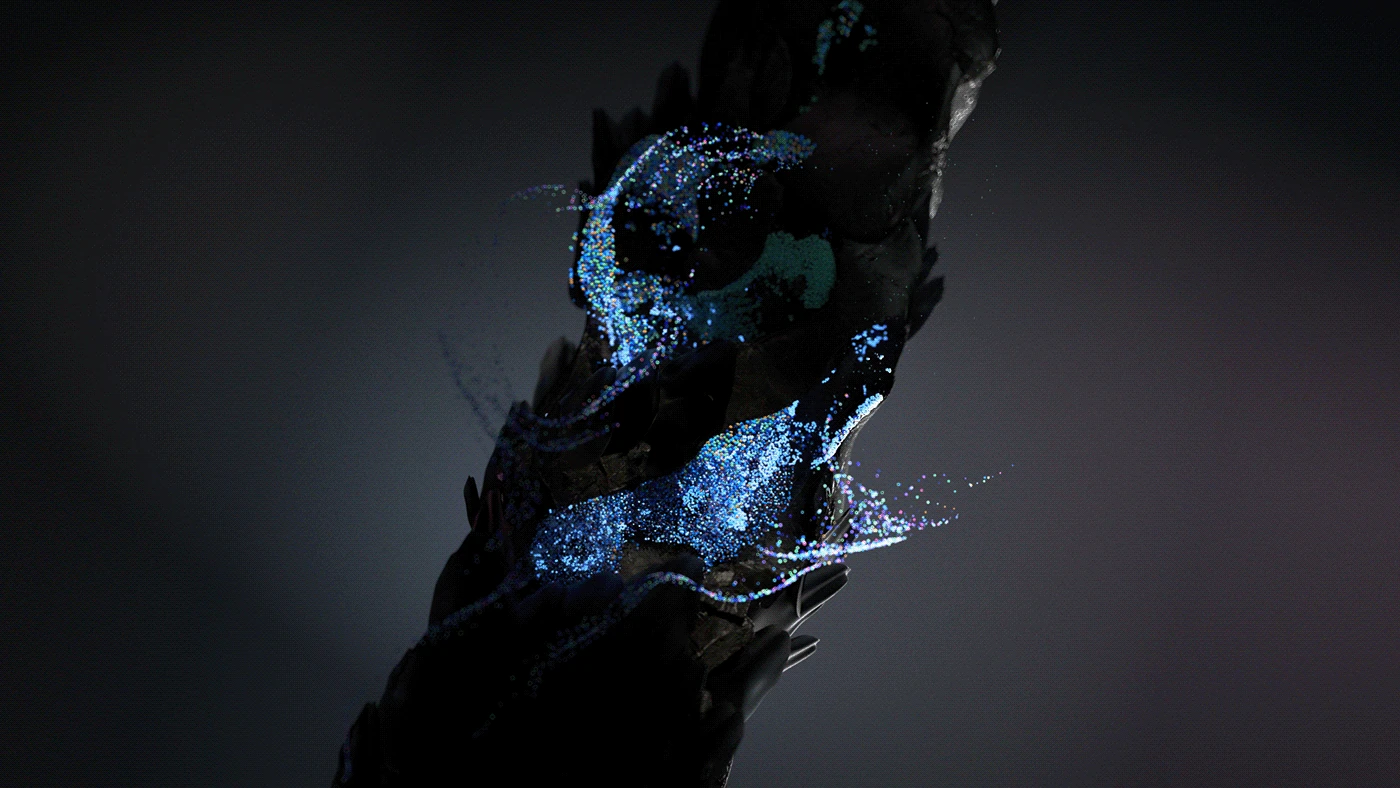
Source credit unavailable in the archived page
The references showed that carefully controlled illumination can define a composition before the object itself is fully read.
Shape, texture, reflection, and falloff direct attention across otherwise dark environments.
The final direction therefore combines a subdued background with concentrated luminous forms, preserving detail without flattening the contrast.
Operation steps
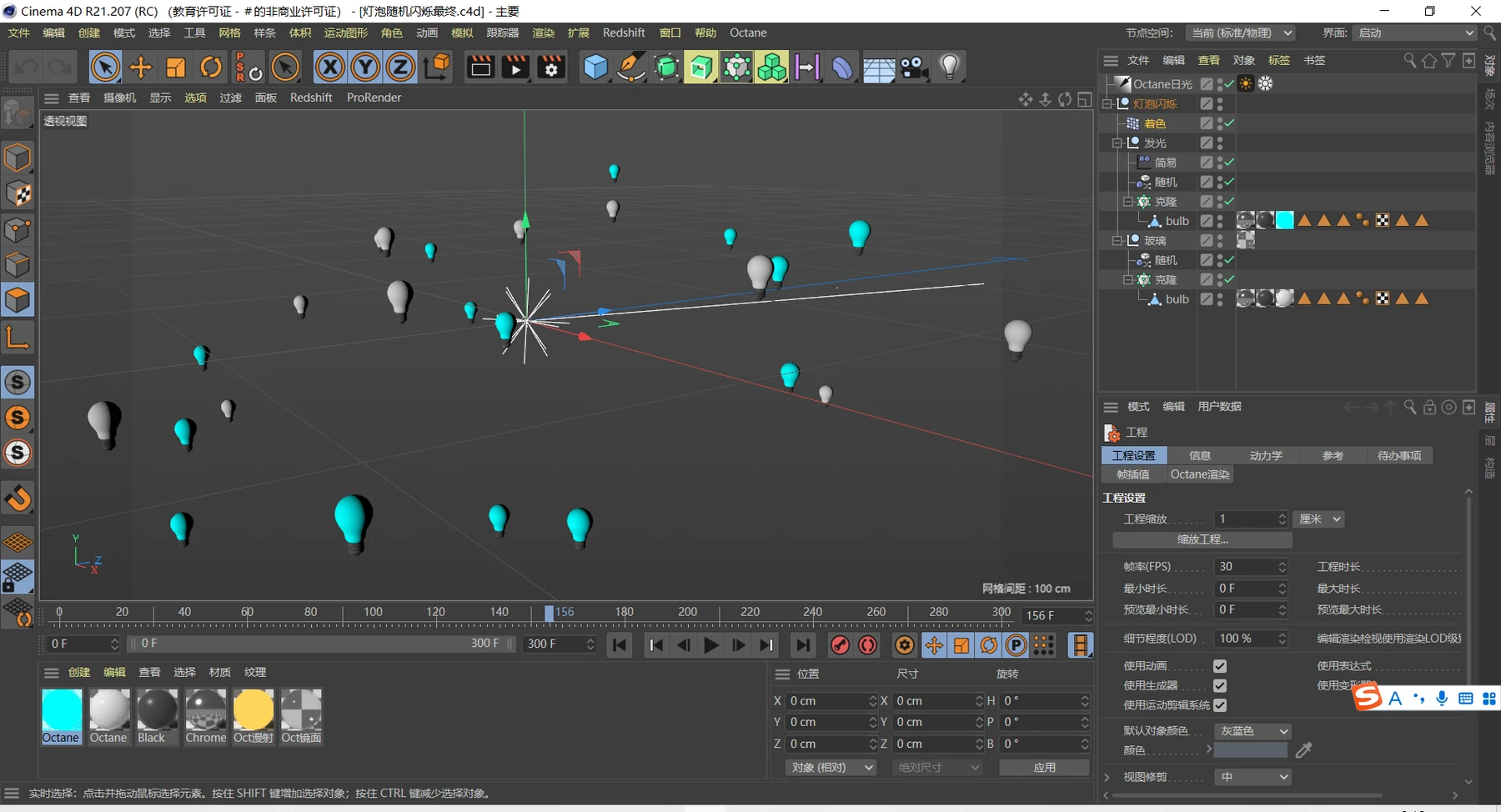
3D scene planning
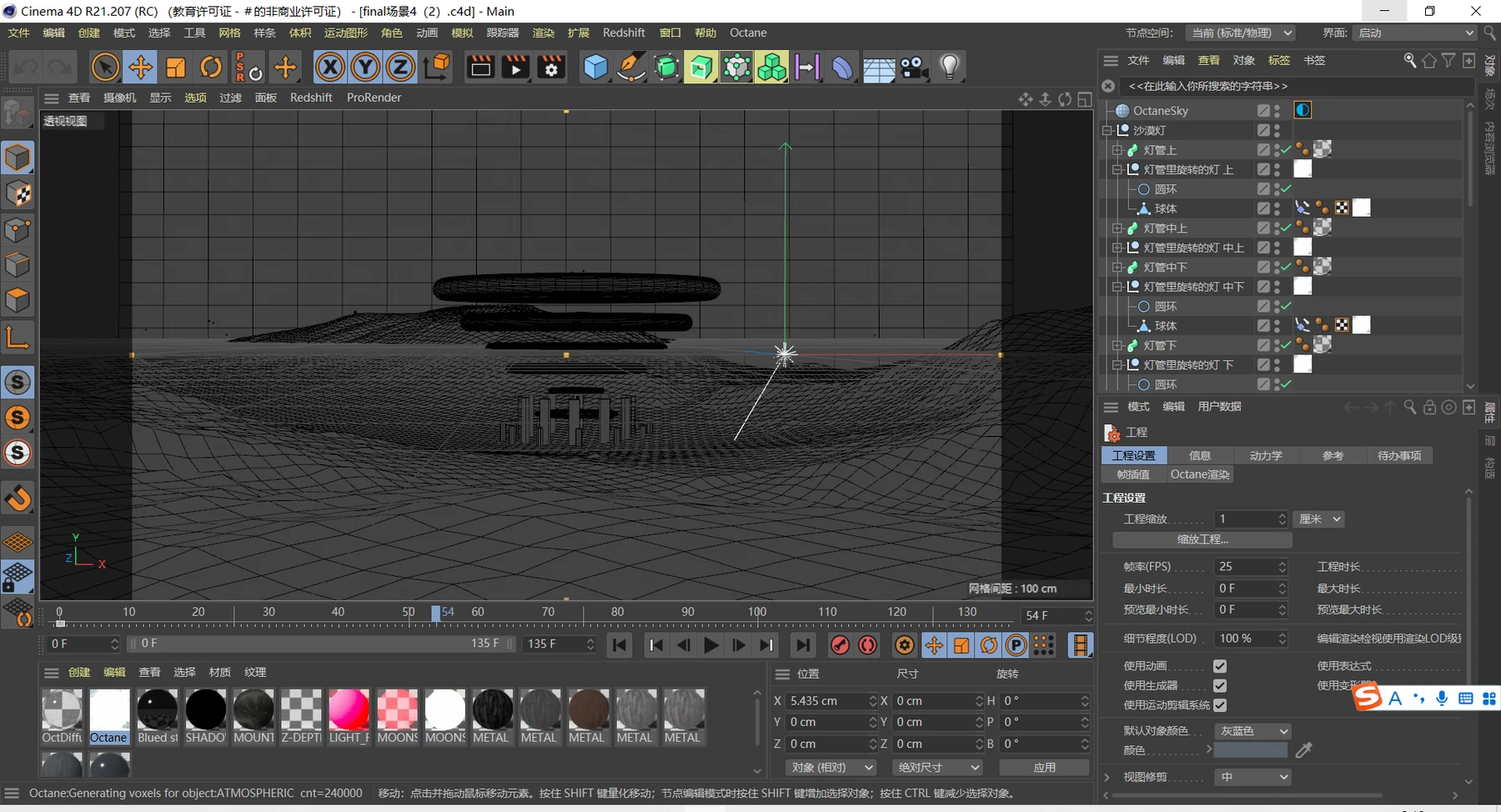
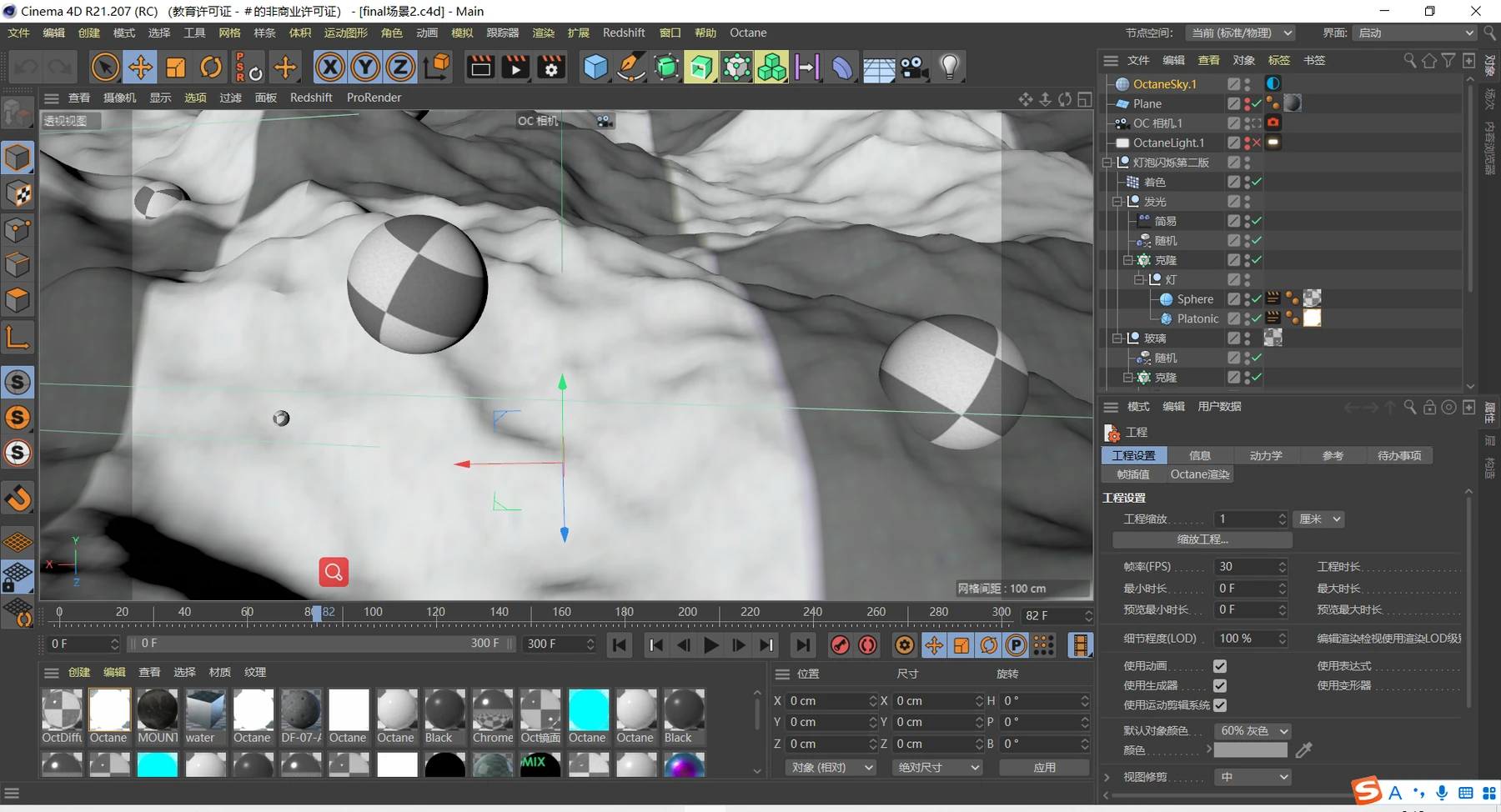
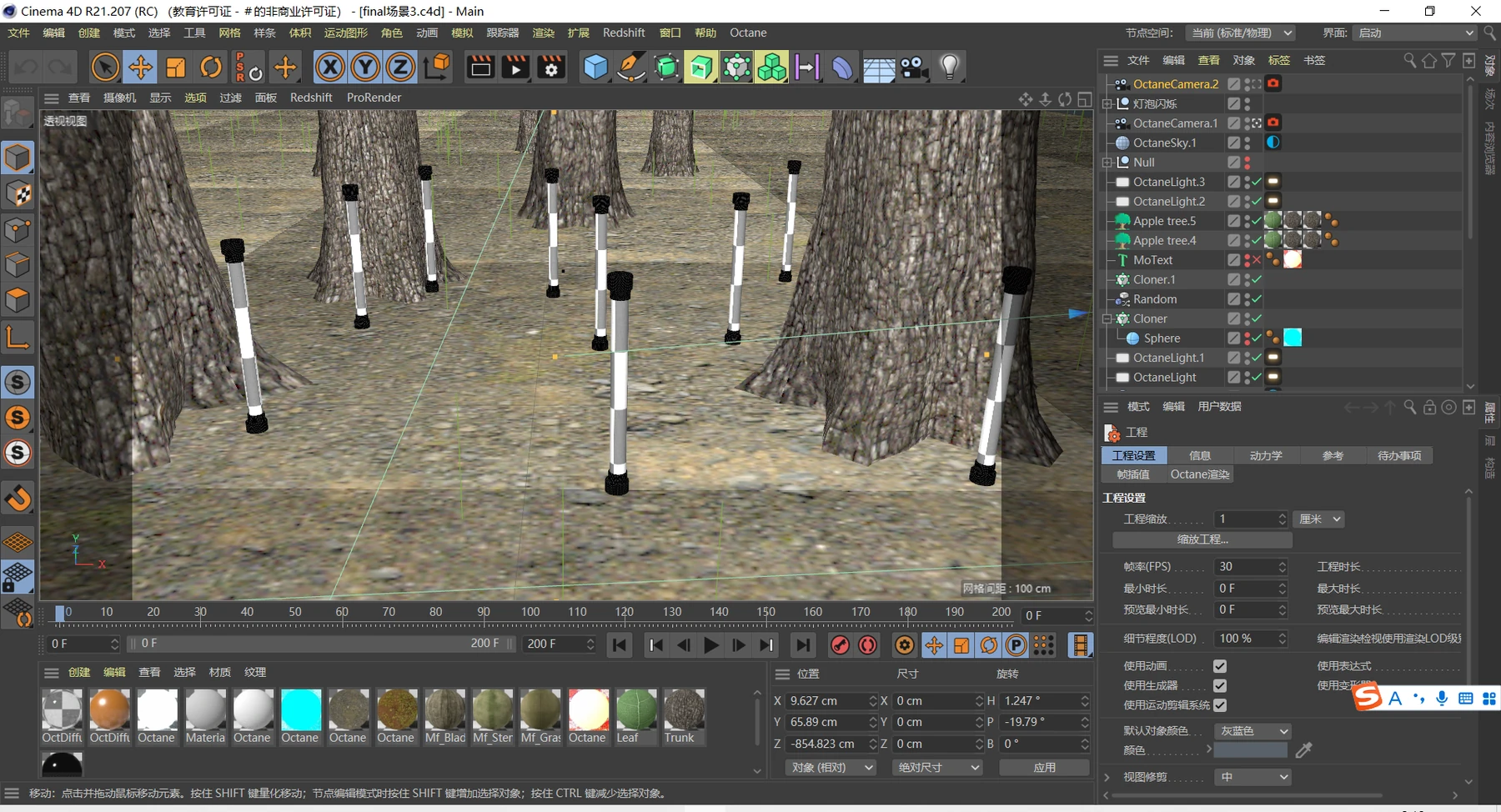
Final scenes
The final film is organized as four connected lighting studies.
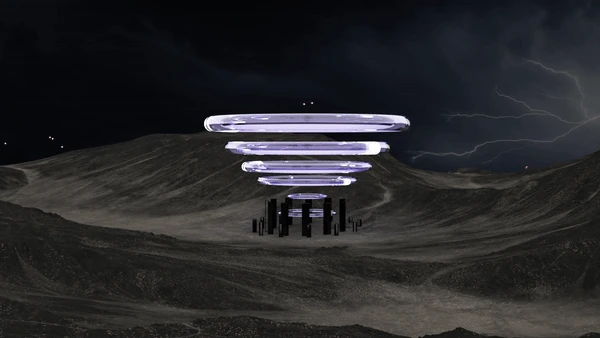
Part 1: Terrain and orbiting lights
The first sequence establishes the visual system through a restrained terrain and sky environment.
After building the landscape and material palette, I modelled a circular glass tube as the central object.
Several luminous spheres orbit the tube, using reflection and refraction to articulate its transparent surface.
Part 2: Sequential and random tube lighting
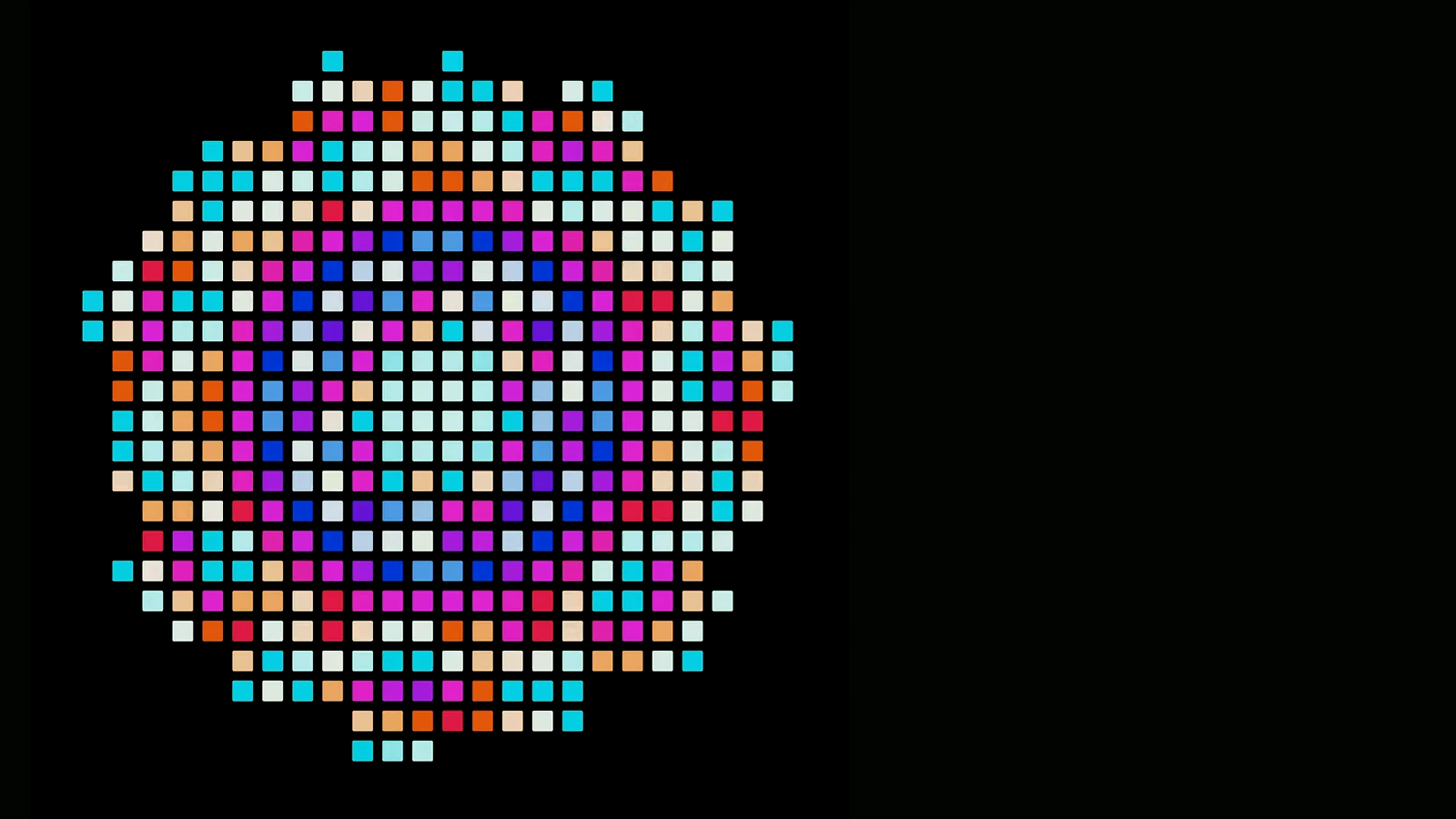
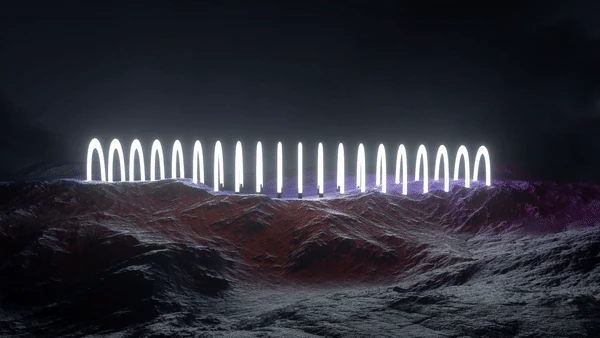
The second sequence tests two behaviours: a controlled progression of light across the tubes and irregular illumination within the same structure.
I used a Linear Field with a Plain Effector to brighten the tubes progressively.
A Noise shader introduces the irregular lighting pattern.
Two Cloners separate the emissive and glass states, so unlit tubes retain their material instead of collapsing into black silhouettes.
Part 3: Forest lighting
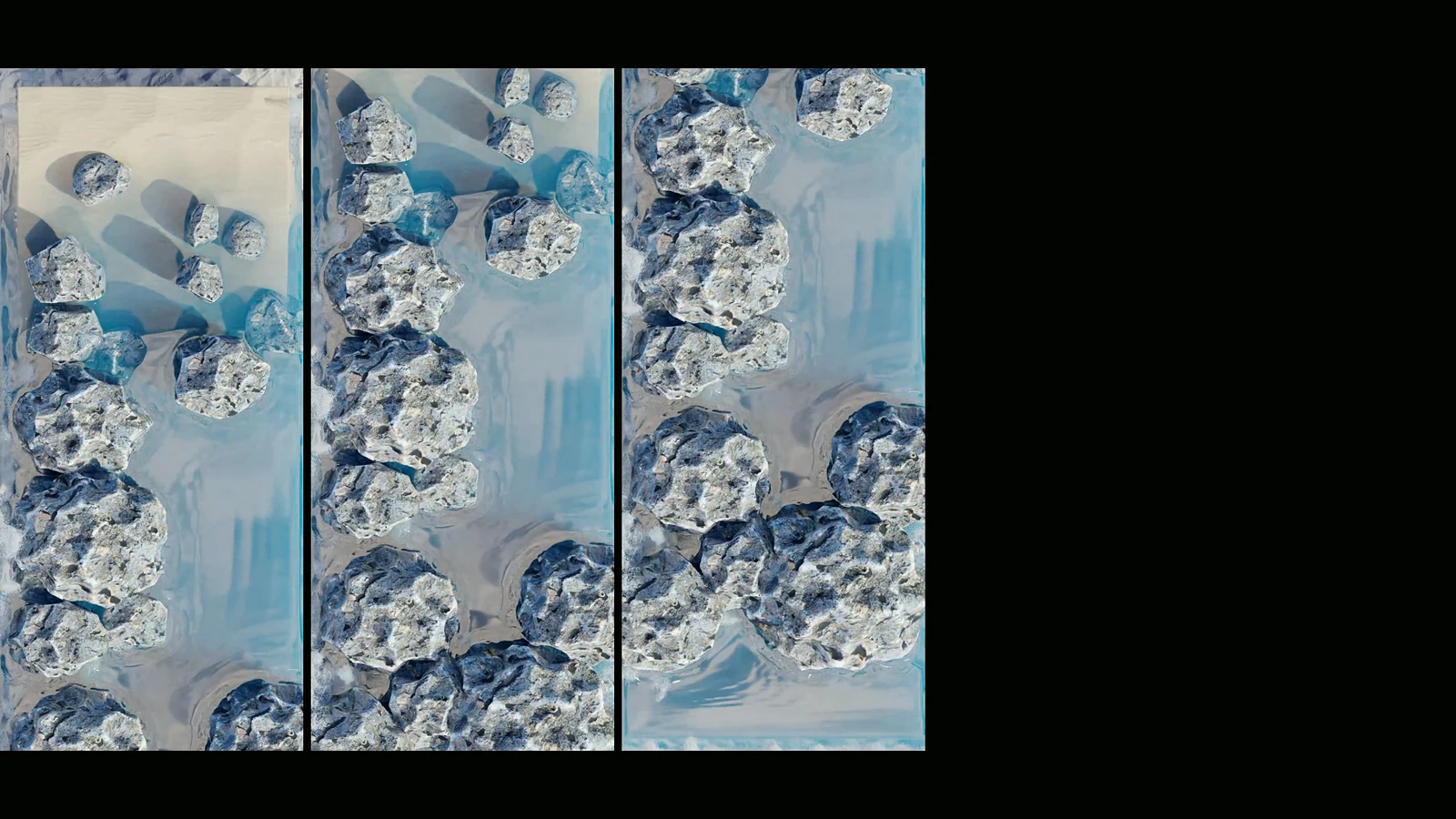
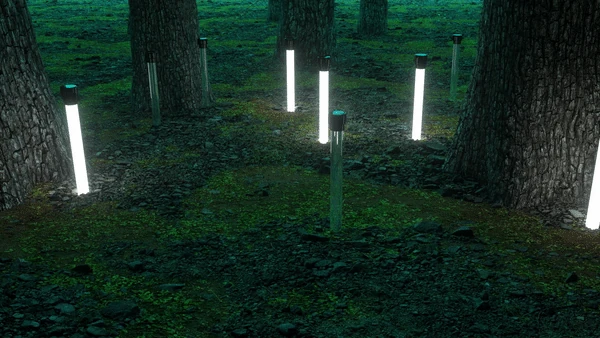
The third sequence extends the field-based lighting system into a more spatial environment.
Forester was used to generate the trees and grass, allowing the light changes to register across a layered landscape.
Part 4: Floating bulbs
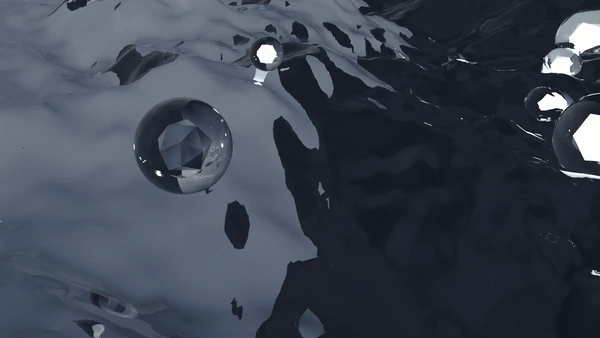
The final sequence required the most iteration because the bulbs needed to move with the water while illuminating independently.
The fourth part took the longest to resolve because the bulbs needed to light at random while moving with the ocean surface.
I set the bulb Cloner to Object mode and used the ocean mesh as its distribution surface, allowing the bulbs to follow the water while retaining independent light behavior.